
Maslach Burnout Inventory for Free: Practical Guidance, Benefits, and Smart Use
- 19 December 2025
Take Maslach Burnout Inventory (MBI) Tool
Get StartedUnderstanding the MBI and Why Accessible Screening Options Matter
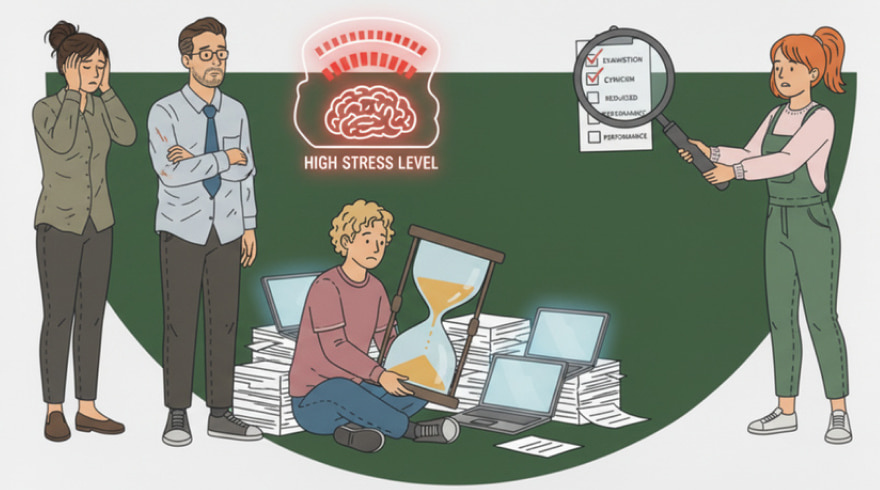
The Maslach Burnout Inventory (MBI) is the most widely cited instrument for evaluating work-related burnout across three core dimensions: emotional exhaustion, depersonalization (or cynicism), and reduced personal accomplishment. Developed through rigorous research by Christina Maslach and colleagues, the measure has informed policies, clinical protocols, and organizational change for decades. Practitioners value the MBI because it offers a structured, psychometrically validated lens on strain that accumulates from chronic job demands and inadequate resources. Used well, it does more than label distress; it points toward targeted interventions that address workload, fairness, recognition, and autonomy.
Many readers discover the tool while searching for wellness resources that are simple, fast, and trustworthy. In introductory guides, the Maslach burnout inventory questionnaire free description often appears as shorthand for accessible screening options that help people reflect before they seek deeper support. That curiosity is understandable, especially for students, volunteers, nonprofit staff, and early‑stage founders who lack budgets for formal assessments. Still, it is essential to distinguish between awareness-oriented self-checks and licensed instruments that include protected content, normative data, and specific scoring guidance.
To use any burnout measure responsibly, context is everything. Results can fluctuate with seasonality, role changes, and life events, so a single snapshot should be interpreted alongside recent workload patterns, team climate, and recovery opportunities outside work. When organizations use aggregated insights, they should pair them with participatory action planning, transparent timelines, and clear accountability. That way, measurement becomes a catalyst for humane change rather than a checkbox.
Why Cost-Free Pathways Help Individuals Start the Conversation
Budget constraints are real barriers to early detection of stress and exhaustion, yet the stakes are high: unaddressed burnout erodes safety, service quality, and retention. Lightweight self-checks can nudge people to pay attention to concentration dips, emotional fatigue, and cynicism before they become entrenched. Leaders also gain language for constructive dialogue, shifting culture from silent endurance to proactive problem‑solving. When the first step is easy and private, more people take it, and that ripple effect enables earlier support and smarter resource allocation.
For cash‑constrained teams, the Maslach burnout inventory free idea becomes a gateway for conversation rather than a replacement for clinical evaluation. The most ethical approach is to use brief, research‑informed screeners for awareness and then channel those insights into formal processes when stakes are high, such as staffing decisions or safety‑critical roles. Clarity about purpose matters: a pulse check invites reflection; a validated diagnostic requires licensing and trained interpretation.
Organizations that offer a gentle entry point can do so without compromising fidelity. They can communicate that a quick self‑check is voluntary, confidential, and intended to guide self‑care or coaching, not to evaluate performance. They can also provide clear next steps, including scheduling with a clinician, using employee assistance programs, or requesting workload negotiations. With these guardrails, accessibility supports, not dilutes, evidence‑based practice.
- Start with private self‑checks that invite reflection.
- Pair measurement with tangible supports and resources.
- Avoid high‑stakes uses without licensed tools and trained reviewers.
- Share aggregate trends transparently and act on them.
How the Questionnaire Works
Most readers encounter burnout instruments as a series of frequency-based items scored on a Likert scale. The MBI popularized a three‑factor model: emotional exhaustion (feeling depleted), depersonalization/cynicism (distancing from those served), and personal accomplishment (sense of effectiveness). Higher emotional exhaustion and cynicism indicate greater distress, while lower personal accomplishment signals risk. The number of items and wording vary by sector (Human Services, Educators, General Survey forms), and licensed versions include proprietary norms that enable comparison by profession and demographic slices.
Across digital wellness portals, the Maslach burnout inventory free online label often points to brief screeners inspired by the original scales, not the licensed questionnaire. These tools can be useful for self‑reflection, yet they typically lack the normative benchmarks and copyright‑protected phrasing that give the official instruments their precision. When using any screener, look for clear statements about authorship, purpose, and data handling so you know what is being measured and how your responses will be used.
To highlight the structure at a glance, the following overview maps common elements you will see in burnout measures that draw on the MBI tradition, along with practical notes for everyday users.
| Dimension | What it captures | Typical item theme | Time to complete | Practical notes |
|---|---|---|---|---|
| Emotional Exhaustion | Persistent fatigue and drained energy related to work | Frequency of feeling emotionally overextended | 7–10 minutes for a standard set | High scores signal overload and recovery deficits |
| Depersonalization/Cynicism | Detached, irritable, or cynical attitudes toward work or people served | Moments of indifference or impatience | 7–10 minutes when coMBIned with other scales | Elevated scores can impair service quality and team climate |
| Personal Accomplishment | Sense of efficacy and achievement at work | Feelings of competence and meaningful progress | Part of the same brief session | Lower scores suggest misfit, resource gaps, or recognition issues |
As you interpret any result, trends over time are more informative than one-off values. Pair the numbers with qualitative observations: calendar churn, after‑hours load, interruptions, and support from supervisors. The goal is translation, turning scores into reasonable adjustments that reduce chronic demands and restore buffers.
Benefits of Using a Structured Self-Check for Wellbeing and Performance
A structured burnout self‑check brings language and specificity to experiences that otherwise feel vague. Instead of “I’m just tired,” workers can identify which domain is most affected and select targeted actions. This concreteness makes conversations with managers more productive, guides clinicians in triage, and helps teams choose interventions with the best chance of impact. When results are anonymized and aggregated, organizations can see hotspots and act where the return on effort is highest.
When resources are scarce, the Maslach burnout inventory test free route can lower the threshold for reflection while encouraging follow‑up with evidence‑based supports. People often use quick screeners to check their trajectory, then bring that snapshot to a supervisor or counselor. With that bridge in place, a short self‑check becomes a catalyst for workload redesign, boundary setting, or peer support circles.
Benefits compound when measurement is coupled with action. Teams can run brief check‑ins before and after surge periods to tell whether interventions are working. Individuals can track sleep, focus, and mood alongside the three burnout domains to spot patterns. Leaders can use periodic results to justify staffing changes or re‑prioritize projects without guesswork. Over time, this feedback loop shifts culture toward sustainable performance.
- Sharper insight into which burnout domain drives distress.
- Faster alignment on specific interventions and support.
- Better justification for resource allocation and policy changes.
- Momentum for continuous improvement through repeated cycles.
Taking the Assessment Online Safely and Privately
Privacy, data ownership, and licensing are the three pillars of safe online assessment. Before answering any questionnaire, review who operates the site, how results are stored, and whether your responses can be deleted. Reputable platforms state their purpose clearly, avoid invasive trackers, and provide contact information for questions or removal requests. If you are part of an organization, ask whether there is an approved vendor whose security posture has been vetted.
On search engines, the Maslach burnout inventory free download wording frequently returns questionable files that may violate licensing or expose users to malware. Stick with established publishers or institutional wellness portals, and be cautious with PDFs or spreadsheets whose origin you cannot verify. If in doubt, consult your HR, legal, or information security teams, or ask a clinician to recommend a legitimate route that respects both intellectual property and your privacy.
Individuals who want a private check can consider validated open tools (see alternatives below) or employer‑approved platforms that anonymize results. Organizations should publish a short data use statement that explains how information is aggregated, who can see it, and when it will be deleted. Empower users with choice: make participation voluntary, limit identifiable data, and separate wellness information from performance records.
- Verify publisher identity and licensing status.
- Read privacy policies and opt out of unnecessary tracking.
- Use secure, mobile‑friendly portals with clear data controls.
- Avoid unknown downloads and unofficial replications.
Interpreting Results Responsibly and Planning Next Steps
Scores are starting points, not verdicts. High exhaustion without cynicism might point to workload spikes, whereas high cynicism with moderate exhaustion could signal value conflicts or misalignment. Low personal accomplishment often reflects missing feedback, insufficient autonomy, or role aMBIguity. The nuance matters because each pattern calls for different remedies, from staffing plans and scheduling changes to coaching, recognition, or job crafting.
During interpretation, the Maslach burnout inventory MBI free notion should be framed carefully to avoid implying that unofficial tools mirror publisher norms. Licensed measures come with proprietary scoring keys and reference ranges that support comparisons; unofficial screeners are best used for self‑insight and dialogue. When risk is high, suicidality, severe anxiety, panic, substance misuse, seek professional care immediately, regardless of any questionnaire result.
Translate insights into practical steps within your sphere of control. Individuals can protect recovery time, reduce context switching, and negotiate clearer priorities. Managers can audit meeting load, shield focus hours, and ensure task-to-time fit. Organizations can tackle systemic drivers: staffing ratios, recognition practices, growth pathways, and fairness in workloads. Evaluate changes after a few weeks to confirm whether the plan is working and iterate accordingly.
- Map each domain to a specific intervention.
- Track changes over time to validate impact.
- Escalate to clinical care when red flags appear.
- Document lessons learned to inform future cycles.
Ethics, Licensing, and Evidence-Based Alternatives
The MBI is a licensed instrument, and that status protects item wording, scoring keys, and norm tables. Respecting these boundaries isn’t just a legal formality, it preserves measurement quality and ensures that organizations rely on accurate information. Fortunately, there are high‑quality, research‑based alternatives that are freely available for awareness and program evaluation, each with clear guidance on use and citation.
In discussions about ethics, the Maslach burnout inventory questionnaire free download phrasing needs clear disclaimers so readers understand legal boundaries and safer alternatives. Consider the Copenhagen Burnout Inventory (CBI), which assesses personal, work‑related, and client‑related burnout with openly available items and scoring. The Oldenburg Burnout Inventory (OLBI) is another respected option focusing on exhaustion and disengagement, enabling institutions to monitor trends without licensing hurdles.
When choosing a tool, match it to your context and resources. For cross‑sectional pulses and program evaluation, open inventories may be the best fit. For high‑stakes decisions, partner with licensed providers and trained professionals who can interpret results against appropriate norms. Whatever you choose, publish your rationale, document protections for participant data, and commit to acting on findings. Ethical measurement, after all, is measured by what you do next.
- Copenhagen Burnout Inventory (openly available and widely cited).
- Oldenburg Burnout Inventory (exhaustion and disengagement focus).
- Short stress and wellbeing screeners for quick pulses.
- Licensed assessments for clinical or high‑stakes contexts.
FAQ: Common Questions About Accessible Burnout Questionnaires
Is there a universally accepted free version of the MBI?
No. The official MBI is licensed, and its wording, scoring, and norms are protected. Free screeners can still support awareness, but they are not substitutes for the licensed instrument, especially in clinical or organizational decision‑making.
What are good free alternatives for self-assessment?
Consider the Copenhagen Burnout Inventory and the Oldenburg Burnout Inventory. Both are research‑grounded, openly accessible, and suitable for tracking trends or supporting coaching conversations when used with clear consent and privacy safeguards.
Can a quick screener diagnose burnout?
Screeners cannot diagnose medical or psychiatric conditions, and burnout itself is an occupational phenomenon rather than a medical diagnosis. Use results to guide reflection and next steps, and seek professional evaluation if you’re experiencing severe or escalating symptoms.
How should organizations use aggregate results ethically?
Communicate purpose, obtain informed consent, anonymize data, and act on findings. Share what changes will be made, when to expect updates, and how progress will be evaluated. Keep wellness data separate from performance files and provide opt‑out options.
What immediate steps help if my scores indicate high risk?
Prioritize safety and support: contact a clinician, leverage employee assistance programs, and speak with a trusted manager about workload and boundaries. Pair professional help with practical adjustments such as protected focus time, recovery breaks, and clearer priorities.
Getting Started: a Simple, Ethical Path Forward
Begin with an awareness‑oriented self‑check from a reputable source, and treat the results as a conversation starter. If you need formal benchmarking or organizational reporting, work with licensed providers who can ensure valid administration and interpretation. Most importantly, convert insights into action, rebalance workload, invest in recovery, and build team practices that protect human energy. Burnout is not inevitable when measurement and improvement work hand in hand.
For individuals, keep a brief weekly log of energy, focus, and purpose alongside a short screener to notice trends. For teams, run periodic pulses, share aggregate patterns transparently, and commit to two or three concrete changes. For leaders, align metrics with values: sustainable performance, humane pacing, and trust. Progress follows when you measure what matters and act with care.